Mobile Health Consult
  • Home
  • About Us
    • Our Team
    • Contact Us
    • Amb.(Dr.) Morayo Jimoh, CPsychol (WMGA)
    • Clientele
  • Clinics & Services
        • ADHD/ADD Clinic
          • ADHD/ADD CLINIC FOR CHILDREN
          • ADD/ADHD CLINIC FOR ADULTS
        • PSYCHOLOGY CLINIC
          • ASSESSMENTS
          • TREATMENT
        • CORPORATE SERVICES
        • OCCUPATIONAL THERAPY CLINIC
        • PSYCHOLOGICAL FIRST AID
        • NEUROFEEDBACK CLINIC
        • MHC SCHOOL SERVICES
        • SPEECH THERAPY CLINIC
  • Articles
  • Gallery
  • Events
  • Resources
    • Careers
    • Downloads
    • Suggested Reading
149852
28Nov, 2014

Understanding Dyslexia: Successful People with Dyslexia

by Mobile Health Consult

Dyslexia

This month has been our dyslexia awareness month with the theme as “Understanding dyslexia“. During the course of this period, we have shared information on dyslexia which includes: myths and truths about dyslexia, prevalence of dyslexia, causes of dyslexia, differences in brain functions of people with dyslexia and those who do not have it, assessment/diagnosis of dyslexia, strengths and positive skills of people with dyslexia, strategies to help them learn, accommodations and school supports and so much more. It has been an interesting period of unraveling the myth behind dyslexia and creating awareness about it.

In this final part of the series, we will be sharing information about famous and successful individuals who have experienced similar difficulties with language and were found to be dyslexic. Yes! These set of people were able to maximize the diverse strengths they possess and utilize their skills to excel in life, despite the negative reports they received from teachers and the society at large. As creative thinkers, they have been able take on extraordinary and legendary roles, making their impact felt across generations.  Although, some are dead, the impact made by them is still felt till date while some are alive and excelling in their fields. Among these successful people are inventors, actors/actresses, CEOs, entrepreneurs, film producers/directors, writers, architects and more.

Truly, having a diagnosis of dyslexia is not a sentence to failure rather, an awareness of a different learning ability.

Below are some  famous and successful people with dyslexia:

Steve Jobs:Apple Announces Launch Of New Tablet Computer is a name that comes to mind when the computer and telecommunications company ‘Apple’ is mentioned with many inventions such as laptops and portable devices like iphones, ipods and ipads. Steve jobs is best known as a co-founder and CEO of Apple. He experienced difficulties in school and was diagnosed with dyslexia.


Albert EinsteinT1519086_24: was a German Physicist, an author and award winning scientist. He was famous for his timeless discoveries and theories. Having dyslexia, he was able to use his imagination and creativity to stand out in his discoveries. He was also known to be a genius with an IQ of 160.

TOM CRUISE


Tom Cruise: was diagnosed with dyslexia and had to work harder on what he was really good at from a young age. In Hollywood film industry,  he is a peak performing actor and producer well known for his leading roles in popular movies and production. He is one actor that has excelled in his field.


Thomas Edison:Thomas Edison was a scientist and inventor with creative innovations that caused a revolution in how things are done presently across the world. Among his innovations was the invention of the light bulb. He was said to have been dyslexic.


Will_Smith__public_domain_-1

Will Smith: The fresh prince of bel-Air as he is popular called is indeed a king of comedy dedicated to excellence. He is an award winning actor famous for his many comedy roles in movies. He refers to his dyslexia as one of the major reasons for his success.


Richard BransonRichard branson: After series of struggles with school work, he was diagnosed with dyslexia, with this, he was able to use his strengths to excel. he is a well known successful entrepreneur. He  is the founder of the Virgin group owner of Virgin Atlantic airlines.


Sally Gardner: a famous author who was diagnosed with dyslexia. She has sold more than Sally Gardner1.5 million copies of her work in the United Kingdom. Her work has been translated into 22 languages.


Orlando

Orlando Bloom: a famous actor and movie star claimed he had to do work three times as hard to get two-thirds of the way.  As a child he was diagnosed  with dyslexia but he was also told that he had a high IQ score. This gave him the confidence he needed to succeed.


faraday

Michael Faraday: an English scientist who contributed greatly to the field of electromagnetic induction was reported to have had terrible trouble with spelling and punctuation. He also had poor memory. One thing that Faraday had common to dyslexics was a powerful visual sense. He was able to form a mental image of most of his studies.


GeorgeGeorge Washington: The  first  United States President  had trouble with words particularly spelling. Historians report that George Washington didn’t spend much time in school and was a self-taught man.  George often spelled words the way they sounded: blew for blue, oyl for oil and coff for cough.  Although there is no evidence, some believe he had dyslexia.

ford


Henry Ford: The famous entrepreneur and businessman was recorded to have had dyslexia. He even attributed some of his success to dyslexia. Even today, decades after he was born, you might still see cars on the road bearing his name.


Whoopi goldberg

Whoopi Goldberg: An actress and humanitarian, Whoopi was diagnosed with dyslexia. She claims that the support of her mother and a great  and understanding teacher helped her surmount her learning challenges. She is one of  twelve people in history to have won all four of entertainment’s major awards: Oscar, Tony, Emmy and Grammy.


These are only a few of the many famous and successful individuals that were diagnosed with dyslexia and have been able to focus and maximize their strengths to excel in life. They did not let anything hold them back not even a learning difficulty!

 Children with dyslexia have enormous capacity and abilities to succeed.

 They learn differently. They have gifts.They are special!

They can become anything they set their minds upon with your love, encouragement and support.
200299390-001

Remember to follow @DrMorayoJimoh for more updates. You can contact us for a consultation on dyslexia by clicking HERE

We would love to hear from you at Mobile Health Consult!

27Nov, 2014

Understanding Dyslexia: Learning Strategies

by Mobile Health Consult

In the previous article, we were informed about the diverse strengths and positive skills possessed by people with dyslexia. In this article, we will learn how teachers and parents can maximize those strengths by incorporating appropriate strategies that suits the brain function and learning difference of people with dyslexia.

Brain based strategies for teachers and parents of children with dyslexia

learning brainTeachers and parents can maximize the strengths of children with dyslexia and help them learn by incorporating these strategies in their teaching methods.

  1. Teaching strategies: When teaching, the student with dyslexia must be shown the big picture and then how the details fit into it. Topics must be broken down for them to aid understanding. Simple items or topics must be presented before the more difficult ones, from the concrete to the abstract and from the visual to the auditory. Learning must involve constant review and practice at every step of the learning process to ensure mastery.
  2. Multisensory teaching methods:Multisensory Multisensory learning involves the use of visual, auditory, and kinesthetic-tactile pathways simultaneously to enhance memory and learning of written language. Links are consistently made between the visual (language we see), auditory (language we hear), and kinesthetic-tactile (language symbols we feel) pathways in learning to read and spell.
  3. Environmental support:The learning environment or classroom should be quiet and free from distractions. Having a carpet or rug in the classroom area will help keep down noise. Minimize distractions to allow students with dyslexia have an area where they can read or concentrate on class work. For students with dyslexia who are showing signs of anxiety, there can be a time-out area when they are feeling very nervous, upset or frustrated.
  4. Assessments and Grading: Students should be allowed to use electronic helpers when completing class work or tests. Examples include an electronic dictionary, speller or thesaurus, computers and talking calculators. Do not take off points for spelling. If you mark spelling errors, do so separately and create a list of words frequently misspelled for students to refer to during writing assignments. You may also offer oral testing and longer time for formal assessments.


School support/accommodations for children with dyslexia

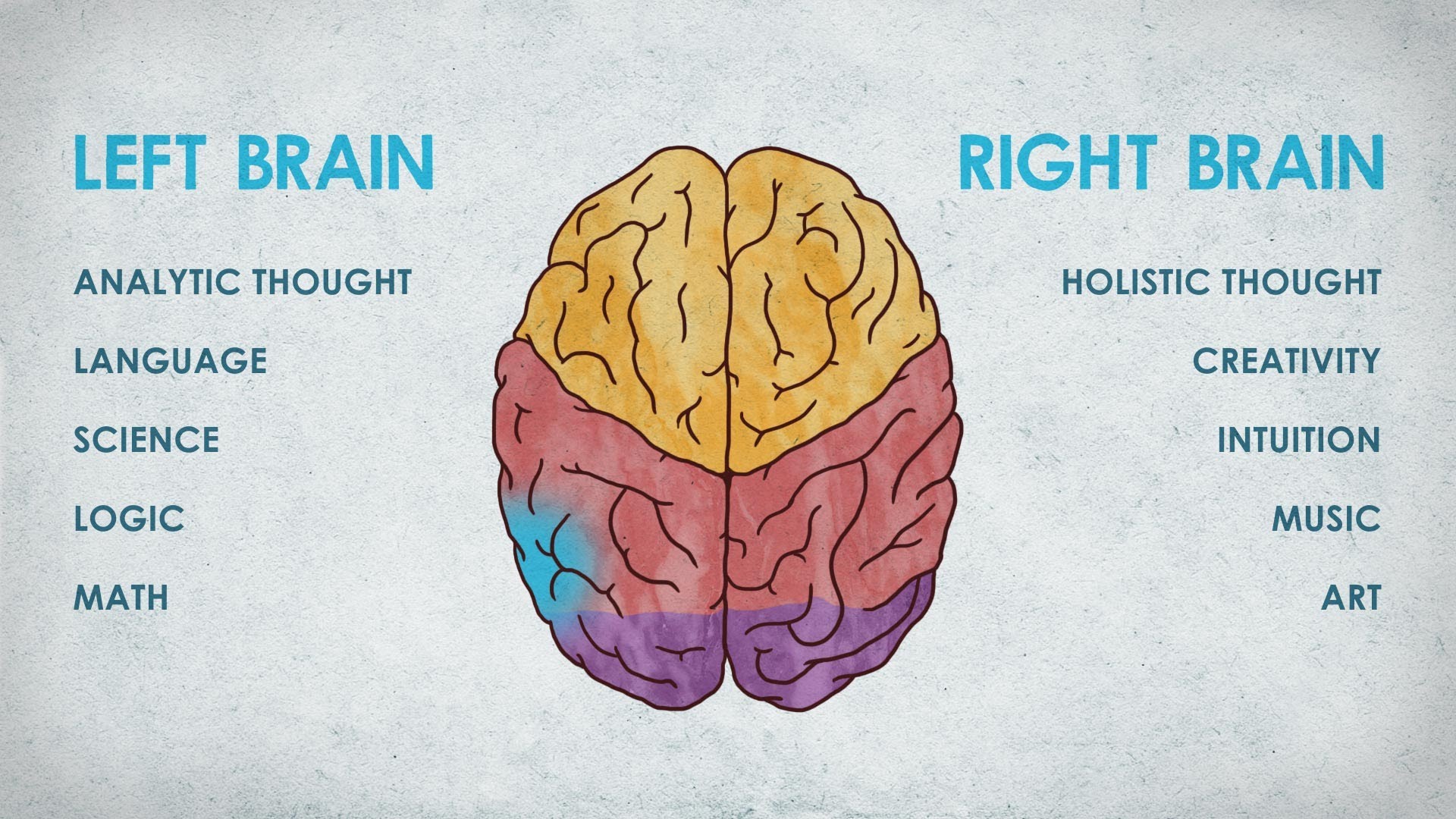
MPP0040859The teaching methods utilized in most schools are those that teach learning skills easily processed by the left hemisphere of the brain, these methods make it easy for students/pupils to process abstract symbols of written language. However, these teaching methods are not appropriate for children with dyslexia as it was discussed in the second article of these series that people with dyslexia utilize more of the right side of their brain to process language hence they require a different learning method. With materials presented, students with dyslexia can be given appropriate accommodations. Some of these include:

  •  Clarifying or simplifying directions or instructions
  • Presenting bits of work at a time to prevent information or memory overload
  • Presenting text in larger fonts
  • Highlighting essential information
  • Recording lessons so they can be replayed
  • Making use of step-by-step instructions when teaching
  • Combine visual information with verbal and written ones- let them “see” what is being taught, this will help them remember more. Let there be visual representation of all information given.
  • Make use of colours for written work. This adds some excitement to writing.
  • Encourage their skills/talents like drawing, painting and singing.
  • Allow them present their answers orally when testing if they find it very difficult writing down the answers.
  • Help build their self-esteem
  • Reduce fear and anxiety by never forcing them to spell difficult words or read aloud in class.


Successful people diagnosed with dyslexia who have utilized their strengths and have become famous  with their skills will be the subject of discussion in the next and final article of these series.

Always remember that individuals with dyslexia have strengths and can excel in life.

Follow @DrMorayoJimoh for more updates. You can contact us for a consultation on dyslexia by clicking HERE

We would love to hear from you at Mobile Health Consult!


25Nov, 2014

Understanding Dyslexia: Strengths and positive skills

by Mobile Health Consult

HiResWith the previous article dwelling on the signs and causes of dyslexia, it is important to note that a formal psycho-educational assessment is required to ascertain if a person has dyslexia. This assessment is aimed at examining memory, language, orientation in time and space, behaviour, motor skills, intellectual ability, bodily awareness, information processing, psycho-linguistic processing, and academic skills of the child. It determines whether or not the child is reading, writing or spelling at age appropriate level. Such assessments also take into account the child’s birth history, developmental milestones and overall school performance. It is conducted by trained specialists such as educational psychologists.

Strengths and positive skills of individuals with dyslexia

Although children with dyslexia have average or above average intelligence, they may experience difficulties learning language based subjects since language is the most common mode of communicating new knowledge in schools. People or children with dyslexia can learn to read and be proficient in language skills when their strengths are maximized. They have inherent strengths that if used can make them perform at levels at par with their contemporaries.

Below are some positive strengths of individuals with dyslexiaStrengths

  • They are great at visuo-spatial thinking.
  • Fast problem solvers who are able to think laterally
  • They are intuitive and good at reading people
  • They are verbally articulate and may be  great communicators
  • Creativity is a major strength possessed by them – so many people with dyslexia excel as designers, artists, actors and more
  • They are excellent at solving puzzles
  • They are spatially talented- many individuals with dyslexia are employed as engineers, architects, designers, artists, mathematicians, physicists, physicians, dentists and some other professions.
  • Individuals with dyslexia frequently enjoy above average physical co-ordination skills
  • they possess great emotional strengths such as empathy
  • They are inclined to think outside the box most of the times.
  • They are persistent individuals.

strengths 1


In order to maximize these strengths, brain based strategies are necessary to be utilized when teaching individuals with dyslexia and this will be the focus of the next article.

Always remember that individuals with dyslexia have strengths and learn differently!

Follow @DrMorayoJimoh for more updates. You can contact us for a consultation on dyslexia by clicking HERE

We would love to hear from you at Mobile Health Consult!


13Nov, 2014

Understanding Dyslexia: Learning and Brain differences

by Mobile Health Consult


black-boy-readingJohn hates being called to read aloud in his class, he usually has some trouble saying some words even when he recognizes them. School is not really his favourite place to be because all his teachers complain about his writing and spelling. His parents often compare him with his  siblings saying “he is just the lazy one”.  He often gets discouraged thinking he is not as smart as his siblings and other pupils in his class. John would rather work on his drawings and participate in other activities that deal less with writing or reading.

What John, his parents and teachers have not realized is that he has dyslexia.


In the previous article of this month’s series on understanding dyslexia, we shared some information about what dyslexia is and some prevailing myths and truths about dyslexia. In this second part, we will emphasize on the description of dyslexia, causes, prevalence, signs and symptoms which accounts for learning and brain differences in people with dyslexia.

DESCRIBING DYSLEXIA

Dyslexia can be described as a brain based learning difficulty which is often hereditary and results in problems with:

  • Reading
  • Writing
  • Spelling

Also, it is associated with difficulties in concentration, short term memory and organization which are essential skills to facilitate learning that has to do with language. This is why people with dyslexia can be wrongly labelled as being “lazy”, “stupid”, “dumb”, “less intelligent” or “mentally slow/retarded” . Eliminating these wrong notions about dyslexia creates a better understanding of what is really responsible for the perceived learning differences/difficulties experienced by people with dyslexia.

CAUSES OF DYSLEXIA

The major cause of the brain based learning difficulty especially with literacy skills experienced by people who never had any damage to the brain and having adequate intelligence is genetic. As noted earlier, it is a condition that is hereditary; research has shown that it runs in families therefore, a child has a 50% chance of having dyslexia if only one parent has it and a 100% chance if both parents have dyslexia.

People with dyslexia use only the right side of the brain to process language, while people without dyslexia use three areas on the left side of the brain to process language.maxresdefault

Dyslexia is not as a result of laziness, stupidity or poor intelligence, rather, the brains of people with dyslexia are wired differently which accounts for the language difficulties they experience.


PREVALENCE OF DYSLEXIA

  • Dyslexia is the most common learning difficulty.
  • It is estimated that 1 in 10 people have dyslexia.
  • Dyslexia occurs around the world irrespective of tribe, race or socio-economic background.
  • It occurs in both boys and girls.
  • It can be seen in adults too.
  • It varies from person to person.


SIGNS AND SYMPTOMS OF DYSLEXIA

The following are some signs and symptoms experienced by people that may have dyslexia.128563473

  1. Difficulties with reading, spelling and writing despite normal intelligence and proper teaching: consistent reading, spelling and writing errors such as putting letters or words in the wrong order for example; ‘was’ for ‘saw’ or sounding ‘dub’ for ‘bud’ or omitting letters when spelling, such as ‘shool’ for ‘school’ could be a sign of dyslexia.
  1. Delay in reaching developmental milestones: this occurs when children are unable to reach certain language and motor development at the expected age. It could be an early sign of dyslexia.
  1. Speech problems: such as sudden loss of speech and difficulty expressing self through spoken language are possible signs of dyslexia.
  1. Directionality difficulties: confusion with directions such as being uncertain about left or right, up/top or down/bottom directions. It is also responsible for letter reversals such as ‘b’ for ‘d’ (not corrected after a long time of correcting and proper teaching). It is also known as mirror writing and could be a sign of dyslexia.
  2. Pronunciation problems: such as being unable to pronounce long words properly.
  3. Difficulty carrying out a sequence of directions: being unable to follow a sequence of directions is a possible sign of dyslexia.


girl

Dyslexia should be seen as a different learning ability rather than a learning disability. People with dyslexia within any age range are capable of learning efficiently with a different approach that matches their learning ability.

Beyond all the difficulties experienced by people with dyslexia, are strengths unknown to many and themselves. Some of their strengths and more information about people with dyslexia will be shared in the next part of these series.

Remember to follow @DrMorayoJimoh for more interesting updates on understanding dyslexia throughout this month of November!

6Nov, 2014

Understanding Dyslexia: Myths and Truths

by Mobile Health Consult

Are you a parent? A teacher? A school administrator? A special education needs coordinator or consultant? Are you just a lover of children? Do you know anyone who has a child with learning difficulties? Are you interested in enhancing children’s learning ability?

boy

If you answered yes to any of the questions above, then this month’s series on DYSLEXIA is for you. The theme is Understanding Dyslexia. The aim of this series is to uncover what dyslexia really is in the face of prevailing myths. We will be sharing with you the signs, factors responsible, possible intervention plans and strategies, and other interesting information.

Long ago, dyslexia was termed as word blindness. It was also associated with visual impairment. More than it was an educational problem or psychological one, Dyslexia was considered a medical problem that stemmed from damages to brain areas that control language. This introductory article will highlight what dyslexia means and some common myths about dyslexia. You will find out that a child who expresses difficulty reading, or has challenges with sounds or letters of the alphabet is not stupid, lazy or lacking motivation.

What is Dyslexia?

Dyslexia as a word can be broken into two parts- Dys and lexia. Dys means “the absence of” while lexia means language. Thus, Dyslexia is commonly regarded as a difficulty with language which may include: reading, spelling, writing and sometimes speaking.

9 Myths about Dyslexiaalphabet

1. Dyslexia is a visual problem: Reversing letters as b’s instead of d’s is one of the signs of dyslexia but not a sufficient cause or sign for a dyslexia diagnosis. Most children while learning how to write, may reverse letters and eventually grow out of it.

2. Dyslexia affects only boys: Dyslexia is prevalent in both boys and girls. The reason boys get the most referrals is because of their behaviour. In expressing frustration regarding a reading difficulty, the teacher notices and makes referrals.

3. Poor performance equals dyslexia: Dyslexia as a learning difficulty does not imply intellectual disability. In fact most students with dyslexia may have an average or above average intelligence.

4. Dyslexics cannot read:  Children with dyslexia may find it difficult to read, but they can learn to read in which case, it takes them greater effort and more time to read.

5. Dyslexia can be outgrown: Dyslexia as we will see later is a difficulty that stems from impairments in brain functioning. As such, children with dyslexia grow on to become adults who read less automatically like those without dyslexia.

6. Dyslexia is caused by a lack of phonics instruction: Teaching a child phonics will not alleviate dyslexia . While they are able to learn phonics,  they experience difficulties applying them.

7. Every child who struggles with reading is dyslexic: Dyslexia is the most common cause of difficulties with reading, but it is by no means the only cause. Dyslexia does not only cause difficulties in reading but also in spelling, speech, and memorization. If a child is dyslexic, there will be other warning signs.

8. People with dyslexia see things backwards: Children with dyslexia do not see things backwards because dyslexia is not a problem with the eyes. Dyslexia may cause people to reverse certain words because of their confusion when discerning between left and right and their difficulties with comprehension.

brain areas

9. Children with dyslexia are just lazy. They should try harder!: Research has shown that those with dyslexia use a different part of their brain when reading and working with language. Dyslexic people show an abnormal pattern of brain function when reading: they show  under-activity in some regions and over-activity in another which, according to researches, accounts for the difficulty they have in extracting meaning from the printed word.


stupid 2A number of research studies have  provided evidence that people with dyslexia are not poorly taught, lazy, or stupid, rather they  have an inborn brain abnormality that does not have anything to do with their intelligence. When teachers and parents are not aware of these facts, the child is often labelled or branded as being ‘lazy or stupid.’ If children with dyslexia are not diagnosed early enough or do not receive the right type of intervention or classroom accommodations, they often struggle in school.

With the above myths and corresponding truths to debunk them, it is clear that many people including professionals have the wrong idea regarding the cause, symptoms, diagnoses and interventions for  Dyslexia.

 Always remember that every child learns uniquely, Dyslexia isn’t stupidity or laziness!

Welcome to the Dyslexia Awareness month!  Follow @drmorayojimoh for interesting updates.


31Oct, 2014

Let There Be Light!

by Mobile Health Consult

light

“There is no doubt that creativity is the most important human resource of all.

Without creativity, there would be no progress and we

would be forever repeating the same patterns.”

  -Edward de Bono


Creativity is the ability to produce something new through imaginative skills. Gaining these skills is necessary to promote a positive change in our lives (at home, school and at work).

The more creative you are, the more productive you are!

Importance of creativity

  • Creativity stimulates innovationsyoung-office-workers-huddled-at-computer-300x199
  • It increases an individual’s intellectual capital
  • It brings about growth for individuals and organizations
  • It improves intelligenceadults
  • It improves brain functions
  • It boosts leadership and team workleadership and team work
  • It allows better problem solving skills
  • It promotes new ideashigh


Mindfulness as a tool to improve creativity

Mindfulness is a non-judgmental focused awareness of the present moment.

mi

  It allows us to be conscious of the emotions, feelings and sensations that occur within us momentarily. Being mindful is being creative. Mindfulness will help improve creativity in the following ways:

  1. Mindfulness enables us filter distractions and achieve focus which will promote creativity.innovative-brain
  2. There is more clarity when we are mindful. Therefore, the clearer our minds are, the easier it is for creative ideas to flow.
  3. Being an insight meditation, mindfulness allows us to look inwards and see things from a different perspective thereby bringing forth creative solutions.insight meditation
  4. With mindfulness, we become aware of our passion, strength and weaknesses and focus attention on our interests.
  5. With mindfulness, we are able to make more conscious choices and decision about life
  6. We are able to control consciousness when we are mindful.images%3Fq=tbnANd9GcSdCU90_tZXALxvgny1nTcfg03RrnsLhGpNGW-kJenTmiOz7QJlyQ

.

Remember to try something new today to spark up the light of your creativity!

For more information on mindfulness visit: http//www.mobilehealthconsult.org

  • right-arrow2
  • 1
  • …
  • 15
  • 16
  • 17
  • 18
  • 19
  • …
  • 29
  • right-arrow

Date Posts

April 2026
M T W T F S S
 12345
6789101112
13141516171819
20212223242526
27282930  
« Sep    

Tags

Anxiety and Somatic Symptom Disorders Attention-Deficit Hyperactivity Disorder (ADHD) Autism Spectrum Disorder Conduct Disorder Depressive Disorder Disruptive Mood Deregulation Disorder Executive Function Disorder (EFD) Gender Dysphoria Intellectual Disability Neurocognitive Disorder Personality Disorders Post-traumatic Stress Disorder (PTSD) Sleep-Wake Disorders Social (Pragmatic) Communication Disorder Substance-Related and Addictive Disorders

Recent Posts

YOUR MENTAL HEALTH STATUS: POSITIVE OR NEGATIVE?

YOUR MENTAL HEALTH STATUS: POSITIVE OR NEGATIVE?

October 13, 2018
PRESERVING YOUR MENTAL HEALTH DURING THE PANDEMIC PERIOD

PRESERVING YOUR MENTAL HEALTH DURING THE PANDEMIC PERIOD

August 7, 2020

Archives

  • September 2024
  • August 2024
  • July 2024
  • February 2021
  • August 2020
  • December 2018
  • November 2018
  • October 2018
  • January 2017
  • December 2016
  • November 2016
  • October 2016
  • August 2016
  • July 2016
  • June 2016
  • May 2016
  • April 2016
  • March 2016
  • February 2016
  • January 2016
  • December 2015
  • November 2015
  • October 2015
  • September 2015
  • August 2015
  • July 2015
  • June 2015
  • April 2015
  • March 2015
  • February 2015
  • January 2015
  • December 2014
  • November 2014
  • October 2014
  • September 2014
  • August 2014
  • July 2014
  • June 2014
  • May 2014
  • April 2014
  • March 2014
  • February 2014
  • January 2014
  • November 2013
  • August 2013

Newsletter

To receive email releases, simply provide us
with your email address below.

    black-envelope

    Blog Posts

    YOUR MENTAL HEALTH STATUS: POSITIVE OR NEGATIVE?
    YOUR MENTAL HEALTH STATUS: POSITIVE OR NEGATIVE?

    October 13, 2018

    PRESERVING YOUR MENTAL HEALTH DURING THE PANDEMIC PERIOD
    PRESERVING YOUR MENTAL HEALTH DURING THE PANDEMIC PERIOD

    August 7, 2020

    Our Contacts

    • placeholder-for-map-1Block 128B, Plot 8 Remi Olowude Street, 2nd Roundabout, Lekki Phase 1, Lagos, Nigeria
      placeholder-for-map-1Get directions on the mapright-arrow
    • telephone-1+234 (1) 453 4024, 0803 345 1351
      (24/7 General inquiry)
    • black-envelopeinfo@mobilehealthconsult.org
    up-arrow-1