Mobile Health Consult
  • Home
  • About Us
    • Our Team
    • Contact Us
    • Amb.(Dr.) Morayo Jimoh, CPsychol (WMGA)
    • Clientele
  • Clinics & Services
        • ADHD/ADD Clinic
          • ADHD/ADD CLINIC FOR CHILDREN
          • ADD/ADHD CLINIC FOR ADULTS
        • PSYCHOLOGY CLINIC
          • ASSESSMENTS
          • TREATMENT
        • CORPORATE SERVICES
        • OCCUPATIONAL THERAPY CLINIC
        • PSYCHOLOGICAL FIRST AID
        • NEUROFEEDBACK CLINIC
        • MHC SCHOOL SERVICES
        • SPEECH THERAPY CLINIC
  • Articles
  • Gallery
  • Events
  • Resources
    • Careers
    • Downloads
    • Suggested Reading
149852
29Jul, 2014

Let It Go!

by Mobile Health Consult
7Jul, 2014

The 3 “Be”s to finding happiness within

by Mobile Health Consult

internal dialogue“Getting this promotion will make me the happiest person ever”

“I just need to seal this contract and all my dreams would have come true”

“Obtaining a PhD degree will give me satisfaction beyond measure”

“I love him so much, I can’t be happy without him”

These  statements whether as internal dialogue (conversations we have with ourselves) or while interacting with others, reveal what gives rise to happiness in our lives . It is common place to attach happiness, fulfillment and satisfaction to achievements, material possessions or significant others. Some people tie their happiness to the approval they get from friends and colleagues while others derive their worth and sense of self from the acceptance they receive from society. These statements become beliefs which are often held on to so rigidly such that falling short of them could lead to emotional problems. It is opined that when there is a large inconsistency between who we are (real) and who we would like to be (ideal), anxiety may result. When we make our happiness solely dependent on others, then our fate and destiny may as well  be  in their hands. In a sense, we have no control over what we feel and we allow other factors other than ourselves determine our happiness.

Should this be the case?  What then happens when the storms of life throw you off balance? Is happiness a function of your environment or YOU?

While it is very important to have goals, strive for achievements and accomplish great things in life, they should not be held on to as sources of happiness and fulfillment. Life is, most times unpredictable and to leave our emotions in its hands would be unwise.

How then can you find the silver lining in the cloud?  Very simple! Open your mind’s eye to the secrets below to experiencing moment by moment happiness:

Thankful hands1. Be thankful: Have a heart of gratitude! By being grateful for the little things in life, the air you breathe, the food you eat, the water you drink, and your health,  you will find happiness. These seemingly little things make life count and remain the basis of other achievements,after all it would be impossible to be at work or function effectively to achieve any goal when ill. Don’t forget that a thankful heart is a happy heart.

smile

2. Be Cheerful: Smile, Smile and Smile. Work out your happiness from inside out. Research shows that facial expressions can influence emotions felt. So even when  you are not in a good mood, Smile! Even when your boss demands more than is required from you, Smile! When your account is red, Smile! When you can’t seem to figure life out, Smile. Just Smile!

mindful

3. Be Mindful: By accepting your present status without judgment and by paying attention to the NOW, you can find happiness. You can be mindful each day of the week, by identifying 3 things that brightened your day and listing them out in a journal. You can also boost your mood by practicing mindfulness meditation. It is a beautiful and well rewarding practice that can boost positive emotions by guiding you into a calm state. You can find out more by registering for a FREE training on www.mobilehealthconsult.org. Here you will learn about mindful sitting, walking, eating and incorporating mindfulness into your daily activities.

Remember happiness is a DECISION that YOU are responsible for.

It is by Choice and not by Chance.

Be! and Be Happy!happiness-balloons

2Jul, 2014

MANAGING DYSLEXIA WITH MINDFULNESS MEDITATION

by Mobile Health Consult

                                      Image  

Every day school activity e.g. reading an interesting comprehension aloud in the class may seem so ordinary and stress free for most persons. There are however persons who find such tasks overwhelming. The letters may seem to dance as they read thus, experiencing difficulties reading them. Dyslexia is a difficulty of language development. It is the most common learning disability affecting about 5 in every 100 children across the globe.

Image

Dyslexia is a learning disability of reading characterized by the following symptoms.

  •       Difficulties with word recognition spelling and decoding.
  •       Difficulties reading fluently.
  •       Slow development of language skills.
  •       Auditory short term memory.
  •       Difficulties with directionality.

This differs in persons depending on the severity. Certain persons may experience more of the writing difficulties others may experience more of reading or directionality difficulties. Some persons show signs of difficulty with early reading and writing and then later experience other language skills disabilities. The above symptoms do not signify that the children have below average intelligence.


EFFECTS OF DYSLEXIA

                                                   Image                         

  1. SELF ESTEEM: The presence of the above symptoms often reduces an individual’s sense of self worth. This induces stress on the child and as a result, can make the child dread going to school. Dealing with the stress of school work makes for frustration and reduction in sense of self worth.
  2.  SOCIAL LIFE: Dyslexia makes it difficult for children to express themselves and others would also find it tasking to understand them. They also may find it difficult to understand jokes. Thus, making it difficult for them to relate with their peers and greatly limiting their social life.


  DIAGNOSIS

                                  Image                            

Trained professionals can conduct certain assessments to determine/ identify it. You can also log on to www.mobilehealthconsult.org to book assessment appointments.

TREATMENT AND MANAGEMENT

  • MINDFULNESS: This is a complete focus of the present moment involving awareness of bodily sensations, the environment and thoughts without judging it as good or bad. It has been found severally to improve general well being especially psychological health.

Image

Through mindfulness, dyslexic individuals can improve their memory span. Mindfulness also would be key in increasing focus and attention when given  academic tasks thus, greatly improving verbal skills such as the skills of writing, and reading. With these  symptoms checkmated, feelings of self worth and social life gets greatly improved. The effects of mindfulness however are not automatic. It takes time, persistence and patience to master. Sign up for your Childs free mindfulness training today at www.mobilehealthconsult.org/smartmind.


  • DEVELOP AN ENGAGING LEARNING FORMAT FOR THE CHILD:

This is an individualized educational program should be carried out by the educational psychologist. This program should address the child’s needs and difficulties.

Image

  • PHONO-GRAPHIC READING METHODS:

Image

This involves combining words with pictures. This helps the children create a mental pictures of the words and thus helps the child have better memory.

  • EXPOSURE: it may be helpful to expose the child to oral reading, writing, drawing of texts of varying topics at an early stage.
  • Emotional support and encouragement would also be needful for the child.


20Jun, 2014

Equip your child for life

by Mobile Health Consult

???????????????????The school session is gradually coming to an end and summer is just around the corner. Students are putting in their best efforts to make sure they do well to be rewarded with an exciting summer trip. While some children are on the top of their game when it comes to learning and academics, some others may just be struggling to catch up and are slow learners. It is important to understand each child’s needs and peculiarities when it comes to learning. There are different learning styles depending on how each brain learns. Some children are visual in that they quickly assimilate concepts demonstrated in a visual form using pictures, charts, graphs, tables, etc., while some are kinesthetic. This means that they would prefer to touch and feel what is being taught by way of practical classes to assimilate the new information efficiently.

Smart Brain

Regardless of each child’s learning style, there are basic processes involved in learning, reading, writing and any academic task.  The underlying processes responsible for any form of learning to take place are called cognitive processes. The strength of these processes are very critical for learning and academic excellence. These cognitive processes include: Attention, Working Memory, Thinking and reasoning, Sensory integration, Problem solving, Auditory processing, Visual processing, Cognitive flexibility, Processing speed, etc

Learning difficulties, thus, arise when either or some of these skills are weak.

Here’s the good news!

Cognitive Processes and skills can be improved upon!

Research has shown that cognitive or brain training has the capacity to strengthen neural connections in the brain. The neurons are brain cells necessary for processing information from the five senses and also responsible for the above mentioned cognitive processes. When the brain is being trained consistently, those aspects are fortified and efficient processing of information results, however, when they are left dormant, they are pruned. Yes pruned! Research shows that we lose the functionality of aspects of the brain that are not in use. The popular saying in this regard is “You either USE it or LOSE it”.


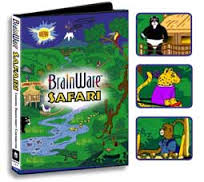
brainware safariYou can equip your child or student for life; by giving him/her access to cognitive enhancement software that will serve to train the brain for optimal performance and academic success.  One major brain training computer program that has garnered a lot of research and interest from education professionals in the United States is BrainWare Safari. Developed by Learning Enhancement Corporation in Chicago, BrainWare Safari is an interactive software that incorporates 35 years of scientific research and approaches to cognitive development into a video game format. Its comprises of 20 exercises and 168 progressively challenging levels that improve cognitive processes as attention, memory, thinking, visual and auditory processing, and sensory integration.  Some of the benefits of BrainWare Safari include:

  • Improved cognitive ability by an average of 4 years in just 12 weeks of CONSISTENT use
  • Boosts academic performance by an average of 1 year 
  • Equips with problem solving skills
  • Increased Confidence
  • Passion for learning and success
  • Striking a balance between learning and fun
  • Home and School Use
  • Parental monitoring of child’s progress.

Brainware use

For more information on purchasing BrainWare Safari and how it works to help children and students, or you, Please click HERE

….. Bringing out the best in children.

18Jun, 2014

Understanding Learning Disorders

by Mobile Health Consult

Certain disorders  make acquisition of  some academic skills difficult for children.

Kayode felt like he was always hitting the books. While his friends were meeting for pickup soccer games after school, he was back home in his room reading and re-reading the same book. Regardless of  how hard he  studied, he had difficulty remembering and his grades stayed average. Meanwhile, his friend Deji, who never seemed to study, always aced tests. It didn’t seem fair.

kayode

As a result of Kayode ‘s frustration, his dad and class teacher made an appointment with the school’s Educational psychologist who later diagnosed him with a learning disorder. Although, Kayode felt relieved to know what was going on, he was also worried. He didn’t like the “disorder” label. And he was concerned about what it might mean for his future.

Would he be able to go to college and study engineering as he’d hoped?

What are Learning Disorders?

Learning disabilities, difficulties or disorders are an umbrella term for a wide variety of learning problems. A learning disorder is not a problem with intelligence or motivation. Children with learning disorders aren’t lazy or dumb. In fact, most are just as smart as everyone else.  A learning disorder can cause a person to have trouble learning and using certain skills. The skills most often affected are:images (3)

  • reading,
  • writing,
  • listening,
  • speaking,
  • reasoning, and
  • Doing math.

Possible causes of Learning Disorders

According to Sheldon Horowitz, Ed.D, experts aren’t exactly sure what causes learning disorders. However, learning disorders may stem from subtle disturbances in brain structure and function that may begin before or even after birth which includes:

  • Heredity/Genetic predisposition: Often, learning disabilities run in the family, so it’s not uncommon to find that people with learning disabilities have parents or other relatives with similar difficulties.
  • Problems during pregnancy and birth: Learning disabilities may be caused by illness or injury during or before birth. It may also be caused by low birth weight, lack of oxygen, drug and alcohol use during pregnancy, and premature or prolonged labor.
  • Incidents after birth:Severe head injuries or trauma, nutritional deprivation, central nervous system infections and exposure to toxic substances (i.e. lead) can contribute to learning disabilities.

Signs and Symptoms of Learning Disorders.

Learning disorders are usually very different from one child to another. One child may struggle with reading and spelling, while another loves literacy but can’t understand numeracy. Another child may experience difficulties comprehending information.

It’s not always easy to identify learning disorders. However, some warning signs are more common than others at different ages.

The following checklist lists some common red flags:

Preschool  (3-6)

  • Trouble finding the right word
  • Problems pronouncing words
  • Difficulty rhyming
  • Trouble learning the alphabet, numbers, colors, shapes, days of the week
  • Difficulty following directions or learning routines
  • Difficulty controlling crayons, pencils, and scissors or coloring within the lines

Ages 5 – 9

  • Trouble learning the connection between letters and sounds
  • Unable to blend sounds to make words
  • Confuses basic words when reading
  • Consistently misspells words and makes frequent reading errors
  • Trouble learning basic math concepts
  • Difficulty telling time and remembering sequences

Ages 10-13

  • Difficulty with reading comprehension or math skills
  • Trouble with open-ended test questions and word problems
  • Dislikes reading and writing; avoids reading aloud
  • Spells the same word differently in a write-up
  • Poor organizational skills (bedroom, homework, desk is messy and disorganized)
  • Trouble following classroom discussions and expressing thoughts aloud
  • Poor handwriting

Intervention for Learning Disorders

A child with a learning disorder should receive his or her own Individualized Education Program, (IEP) after a thorough assessment has been carried out by an Educational psychologist. This personalized and written education plan lists individualized goals for the child, specifies what services and tutoring the child will receive and the specialists who will work with the child.

Visit us at https://www.mobilehealthconsult.org/values/psycho-educational-assessment/ for more information regarding a Psycho-educational assessment.

“How can someone with learning disorders improve their ability to learn, rather than just compensate for difficulties?”

Many of the methods used and promoted to help people with learning disorders are intended to help a person compensate for, or work around, their learning difficulties.

  • Neurofeedback Therapy: Neurofeedback is a technique in which we directly train the brain to help improve its ability to regulate and take care of itself by functioning more efficiently. https://www.mobilehealthconsult.org/values/therapy/educational-and-developmental/what-is-neurofeedback/


  • Cognitive Enhancement Software: BrainWare Safari is an award winning software program that incorporates decades of proven clinical approaches to cognitive skills development into an engaging video game format. It is used to improve IQ, academic performance and overall cognitive abilities. It develops and strengthens cognitive skills crucial for learning. i.e. Attention, memory, visual and auditory processing skills, sensory integration and thinking. Visit https://www.mobilehealthconsult.org/values/cognitive-enhancement-training/brainware-safari for further information on “Brainware Safari”.


7Jun, 2014

Bringing Out the Best in Children

by Mobile Health Consult

Preschoolers can be difficult to manage… The same may apply to all children. They have so much energy to throw around and getting them to sit still is much like a herculean task to not just parents but teachers as well. Children, especially the younger ones, use play as a medium to release tension  and ease as such when they feel anxious or uncomfortable, they try to engage in one form of playful activity or the other. However, you don’t want your child or pupils running about when you need their full attention.

So how can you get their attention?

How can you get them to sit still and learn?

How can you get them to be calm?

How can you help them regulate their emotions?

MINDFULNESS is the SOLUTION! 

child-meditation Mindfulness is being fully aware of this present moment, fully accepting it without judgment. It is paying full attention to your thoughts, feelings and emotions HERE and NOW. It involves deep breathing and calming techniques. These days, mindfulness has proved to be the answer to many questions. Enormous research has shown how mindfulness can help adults improve their brain function, reduce stress and enjoy better relationships. In recent times, researchers and practitioners have begun to focus on how this practice can be beneficial to children and adolescents in primary and secondary schools, children with cancer, learning disabilities, autism, etc. mindful childA number of schools in the United States are incorporating Mindfulness Programs into their school program- Mindful Program at Maryland High Schools. A recent research by University of Florida shows that stressful events in the environment can take a negative toll on a child’s mental and physical health which includes the onset of learning difficulties. As such mindfulness aims at reducing the effects of stress. Other benefits of Mindfulness include:

  • Building resiliencehappy child
  • Strengthening character development
  • Increasing focus and concentration
  • Improving  brain function
  • Improving sleep quality
  • Reducing stress levels and improving  coping ability
  • Inducing calmness and relaxation
  • Self regulation and control
  • Increasing their capacity for empathy and compassion

Mostly the same benefits that accrue to adults can be experienced by children ages 3 and above.

Mobile Health Consult is offering a Mindfulness program for students tagged “SMART MIND”. For more enquiries, consultation and procedure for enrollment, kindly log on to https://www.mobilehealthconsult.org/smartmind/

The only way to know what mindfulness is, is to experience it! Sign up for a FREE Training now on: 

https://www.mobilehealthconsult.org/values/therapy/mindfulness/

SPREAD the word! Be MINDFUL

  • right-arrow2
  • 1
  • …
  • 17
  • 18
  • 19
  • 20
  • 21
  • …
  • 29
  • right-arrow

Date Posts

April 2026
M T W T F S S
 12345
6789101112
13141516171819
20212223242526
27282930  
« Sep    

Tags

Anxiety and Somatic Symptom Disorders Attention-Deficit Hyperactivity Disorder (ADHD) Autism Spectrum Disorder Conduct Disorder Depressive Disorder Disruptive Mood Deregulation Disorder Executive Function Disorder (EFD) Gender Dysphoria Intellectual Disability Neurocognitive Disorder Personality Disorders Post-traumatic Stress Disorder (PTSD) Sleep-Wake Disorders Social (Pragmatic) Communication Disorder Substance-Related and Addictive Disorders

Recent Posts

YOUR MENTAL HEALTH STATUS: POSITIVE OR NEGATIVE?

YOUR MENTAL HEALTH STATUS: POSITIVE OR NEGATIVE?

October 13, 2018
PRESERVING YOUR MENTAL HEALTH DURING THE PANDEMIC PERIOD

PRESERVING YOUR MENTAL HEALTH DURING THE PANDEMIC PERIOD

August 7, 2020

Archives

  • September 2024
  • August 2024
  • July 2024
  • February 2021
  • August 2020
  • December 2018
  • November 2018
  • October 2018
  • January 2017
  • December 2016
  • November 2016
  • October 2016
  • August 2016
  • July 2016
  • June 2016
  • May 2016
  • April 2016
  • March 2016
  • February 2016
  • January 2016
  • December 2015
  • November 2015
  • October 2015
  • September 2015
  • August 2015
  • July 2015
  • June 2015
  • April 2015
  • March 2015
  • February 2015
  • January 2015
  • December 2014
  • November 2014
  • October 2014
  • September 2014
  • August 2014
  • July 2014
  • June 2014
  • May 2014
  • April 2014
  • March 2014
  • February 2014
  • January 2014
  • November 2013
  • August 2013

Newsletter

To receive email releases, simply provide us
with your email address below.

    black-envelope

    Blog Posts

    YOUR MENTAL HEALTH STATUS: POSITIVE OR NEGATIVE?
    YOUR MENTAL HEALTH STATUS: POSITIVE OR NEGATIVE?

    October 13, 2018

    PRESERVING YOUR MENTAL HEALTH DURING THE PANDEMIC PERIOD
    PRESERVING YOUR MENTAL HEALTH DURING THE PANDEMIC PERIOD

    August 7, 2020

    Our Contacts

    • placeholder-for-map-1Block 128B, Plot 8 Remi Olowude Street, 2nd Roundabout, Lekki Phase 1, Lagos, Nigeria
      placeholder-for-map-1Get directions on the mapright-arrow
    • telephone-1+234 (1) 453 4024, 0803 345 1351
      (24/7 General inquiry)
    • black-envelopeinfo@mobilehealthconsult.org
    up-arrow-1