Mobile Health Consult
  • Home
  • About Us
    • Our Team
    • Contact Us
    • Amb.(Dr.) Morayo Jimoh, CPsychol (WMGA)
    • Clientele
  • Clinics & Services
        • ADHD/ADD Clinic
          • ADHD/ADD CLINIC FOR CHILDREN
          • ADD/ADHD CLINIC FOR ADULTS
        • PSYCHOLOGY CLINIC
          • ASSESSMENTS
          • TREATMENT
        • CORPORATE SERVICES
        • OCCUPATIONAL THERAPY CLINIC
        • PSYCHOLOGICAL FIRST AID
        • NEUROFEEDBACK CLINIC
        • MHC SCHOOL SERVICES
        • SPEECH THERAPY CLINIC
  • Articles
  • Gallery
  • Events
  • Resources
    • Careers
    • Downloads
    • Suggested Reading
149852
24Oct, 2014

Brain Fitness: Healthy Brain! Healthy You!

by Mobile Health Consult

Featured Image -- 522As the body needs regular exercise to stay fit and healthy, so also, the human brain needs to be exercised regularly for optimal brain health and cognitive functioning. The brain is the organ of the body that controls our thought processes, thinking, feeling, reasoning, planning, problem solving, creativity, memory, learning and many more. Everything that we are or do emanates from the brain.

How effective you are able to process information, recall facts and events, make strategic decisions at work, study in school, etc, are determined by your brain’s health.

Five proven ways to increase alertness, double information processing speed, focus and boost brain power: 

1. Balanced Brain Healthy Diet. Eating well not only enhances physical health, it can also improve your mental health and reduce the risk of developing age-related cognitive decline as dementia and Alzheimer’s disease. Include in your diets foods rich in omega-3 fatty acids (commonly found in fish and egg yolks), protein (beans), antioxidants(tomatoes, carrots, spinach, red grapes, green tea etc), fruits and vegetables, and vitamin B, Vitamin C; and with the recommended levels of carbohydrates optimize brain health.

basket of fruits

2.  Regular Exercise. Exercise and physical activity increase blood and oxygen circulation, improves coordination and helps prevent conditions such as heart disease, stroke and diabetes, which increase the risk of developing dementia. According to a study carried out at the University of Georgia, exercising briefly for 20 minutes facilitates information processing and memory functions.

cl

3.Continuous learning. “Use it or lose it” is a cliché that explains how the brain works. If some aspects of the brain are not in use, then the cells in the brain slowly degenerate.  The more the brain’s function is used the healthier it becomes. Learning new skills or languages, working on crossword puzzles, taking classes and learning how to dance all challenge and maintain cognitive function.

4. Stay Social. Socializing with friends, volunteering, traveling and doing favorite leisure activities with others keeps the mind active and reduces stress, which can harm brain health. As humans, we have an innate desire to interact with other people. Research has shown that older adults who engaged in steady social activity had the slowest rate of memory decline when compared to those who were less socially active. Thus leading to a conclusion that being socially engaged makes you mentally engaged, which enhances brain health.sleep-150x150

5. Adequate Sleep. Lack of sleep undermines optimal brain health. Poor sleep has been linked to developing Alzheimer’s disease while sound sleep has been discovered to have a restorative effect on the brain. During sleep, the brain flushes out toxins that have been compiled during waking hours. Lack of sleep impairs reasoning, problem-solving, and attention to detail.

Now that you have these 5 keys, you can begin to optimize your brain’s health for peak performance

For more information visit https://www.mobilehealthconsult.org

26Sep, 2014

Loving You More

by Mobile Health Consult

new paper self esteem

You are as amazing as you let yourself be.

Let me repeat that:

You are as amazing as you let yourself be. -Elizabeth Alraune

Throughout life, you become more self-aware and build certain images of yourself as a result of experiences with different people and situations such as experiences during childhood- how you were treated by your family, teachers and others, how your failures and victories were handled and what was modelled to you. All these contribute to the formation of your self-esteem. Simply put, self-esteem is the overall evaluation of yourself, your overall sense of worth or personal value. It is can be high or low.

self-esteem-shutterstock_147348716-617x416

Having a low self-esteem involves having a negative attitude towards yourself resulting in hating rather than loving yourself. The following are some attributes of people with low self-esteem:Abstract Silhouette Praying

  • Feeling worthless
  • Getting depressed easily
  • Seeking approval from others to feel good.
  • Constant self –blame
  • Lack of confidence
  • Eating disorders
  • Social withdrawal

On the other hand, having a high self-esteem involves having a positive attitude towards yourself, resulting in loving yourself completely. These are some attributes of people with a high self-esteem:

  • More self-respecthigh 2
  • Self-approval
  • Feeling worthy of Love and approval
  • Complete acceptance of themselves (they know that they have flaws and make mistakes but are willing to become better)
  • Self-confidence
  • Sense of direction
  • Adventurous (open to changes)
  • Sense of purpose
  • Consciously enjoy life
  • Have successful relationships


Breaking away from the limitations of having negative attitude towards yourself will involve consciously eliminating old patterns of negative beliefs and attitudes and building new patterns that promote positive attitude towards yourself.


MINDFULNESS AS A TOOL TO BOOST YOUR SELF-ESTEEM

Mindfulness is a way of living your life such that you are conscious of the present moment. It has to do with awareness and non-judgemental acceptance of your thoughts and emotions.mindful man

Being mindful will help you build a more positive self-esteem in the following ways:

  • When you are mindful, you are in control of what you do. Therefore you can choose to love yourself better.
  • With mindfulness, you are able to regulate your emotions.
  • It will help train your mind to observe thoughts, feelings and sensations objectively.
  • It helps in developing more self-acceptance and helps you build compassion for others too. When you accept yourself, then you can love yourself more.

selfesteem2Watch yourself become better as you build on your self-esteem by practicing mindfulness. Your life becomes less complicated and you find more happiness when you love yourself more. To find out  more about mindfulness visit: wwww.mobilehealthconsult.org .

Remember, it is easier to love other people when you love yourself.


12Sep, 2014

Raising Smarter Kids

by Mobile Health Consult

sm3

For children to perform better on mental tasks, they need environments and interactions that help expand their intellects and mental abilities. Cognitive development is a continuous process of discovering, sorting, classifying, evaluating, visualizing, understanding and using information to solve problems. Childhood is not only a period of amazing physical growth, it is also a time of remarkable mental development. Cognitive abilities associated with memory, reasoning, problem-solving and thinking continue to emerge throughout childhood.


The whole process a child uses to organize information involves;

  • Acquiring information (perception)
  • Selecting information (Attention)
  • Representing information (Understanding)
  • Retaining information (memory)
  • Usage of the information to guide behaviour (reasoning and coordination of motor outputs).

Therefore, enhancing cognitive function of a child is directed at improving any of these.

You can improve on the cognitive function of your kids and have smarter kids by using any of the following:


  1. Brain Training Games: brainwarelogicothese are computerized and non-computerized games aimed at enhancing brain function and improving memory, examples of brain training games include Brainware safari, Smart Brain Training, Number racer & Logico. These will help to :
  • Improve working memory
  • Increase targeted skills such as logical and mathematical skills
  • Improve concentration and perception abilities
  • Improve problem solving and idea association skills
  • Improving reasoning skills
  • Achieve focus
  • Increase attention span
  1. Audio-Visual Entrainment Devices

sm4Audio-Visual Entrainment devices (A.V.E) influences brainwaves and is an extremely effective, non-invasive method of rapidly re-educating the brain’s natural ‘balance-point’. By flashing lights through an eye set and pulsing tones through headphones, gently guiding the child into various brainwave states. After a short period of time, the brain begins produce the same frequency as at when it is needed. The use of Audio-Visual Entrainment devices (A.V.E) will help your child in the following ways:

  • Increase SMR brain waves to improve attention, focus and concentration
  • Help assimilation of new information thereby improving working memory.
  • Help to accelerate learning
  • Improve your child’s mental performance
  • Enhance creativity
  • Improve problem solving skills
  • Expand perception
  • Improve whole brain function by balancing the two hemispheres of the brain
  1. Mindfulness: imagesThis involves children actively paying attention to their emotions, thoughts and sensations occurring in the present moment in a non-judgemental manner. mindfulness aims at:
  • Improving attention and focus leading to better performance
  • Improving assimilation thereby boosting retention ability
  • Reducing stress
  • Improving resilience.
  • Boosting self-esteem.
  • Building a better ability to regulate one-self.
  • Improving mood
  • Improving both physical and mental health.

Making the right investment for your children is the one of the greatest investments for life. For more information on any of these services visit: http//www.mobilehealthconsult.org.

31Aug, 2014

Neurofeedback: Rays of hope for learning disabilities among students

by Mobile Health Consult

IMG-20150615-WA0003Neurofeedback (NFB) is an operant conditioning procedure by which the subject is trained to increase or inhibit the brain’s production of electrical activity in specific frequency ranges. Prior clinical and experimental studies have demonstrated the efficacy of neurofeedback with a variety of disorders, including attention deficit hyperactivity disorder, epilepsy, anxiety disorders and depression. AT the same time there seems to be a dearth of studies on neurofeedback treatment for learning disability. The main aim of this study is to ascertain the potential benefits of neurofeedback training for students with learning disabilities. Three were referred to author’s clinical practice. A mini-quantative EEG was administered to all the subjects and protocols were developed following analysis. The subjects had an average of 40 to 80 neurofeedback sessions, three times every week. Each session lasted for 30 to 45 minutes. The results support the hypothesis that there will significant improvements in academic functioning following neurofeedback training. It was concluded that neurofeedback may be an efficacious supplement to special education. Limitations of the study and suggestions for further research are presented, and it is recommended that this study be replicated using larger samples.

IMG-20150615-WA0001

21Aug, 2014

NO MORE DELAYS

by Mobile Health Consult

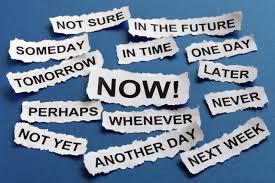
Do you find yourself putting off what could have been done  today to Tomorrow often?

Do you wonder why you have more uncompleted tasks than completed ones on your to-do-list?

Have you ever wondered why you never seem to get any work done on time?

Are there more delays on tasks you should be done with?

pp2

 Procrastination is the habit of putting off important tasks to finish them later. It is a major factor that hinders productivity which many people struggle with every day. You just seem not to find the motivation to undertake a task, project or activity and this affects your effectiveness at home, school or work.

 pp4   ???


REASONS WHY PEOPLE PROCRASTINATE

  • Poor Time Management Habits:time mgt Habits such as disorganization, habitual lateness, failing to keep to a to-do-list, not taking breaks and letting others steal your time are examples of poor time management habit that will certainly lead to procrastination.
  • Stress: stressWhenever you are stressed it is hard to get any work done as you will seem to be under tension all the time and you will end up procrastinating very often.
  • Fear: This could be the fear of failure whereby you struggle with the idea of being inadequate and not living up to the high standards you set for yourself, the fear of success whereby you tend to put as many roadblocks, problems and challenges ahead on your path because of your internal fear of the change that will be associated with possible success, the fear of judgment whereby you procrastinate because you worry about what other people might think of you, your behaviors, decisions or actions. This will all lead to procrastination.
  • Perfectionism:perfectionism when you struggle with perfectionism, you are never satisfied about anything you do. You may find yourself repeating the same activity or task many times over in an attempt to attain perfection and at the end, no work is actually done.
  • Feelings of Inadequacy: You may feel inadequate when you find yourself incapable of dealing with the challenges, problems and obstacles that life throws your way. This may lead to procrastination.
  • Lack of Focus:lack of focus Procrastination occurs also because of a lack of focus and attention. This comes about when you focus on too many things at once, when there are a lot of distractions drawing your attention away, and when your goals and objectives haven’t been clearly defined.
  • Lack of Confidence: You may tend to procrastinate because of a lack of confidence in yourself, your abilities, skills, knowledge, experience, or simply through a lack of confidence completing the task.

 OVERCOMING PROCRASTINATION WITH MINDFULNESS MEDITATION

Delays can be a thing of the past with constant practice of Mindfulness meditation. Mindfulness meditation is the intentional, accepting and non-judgmental focus of one’s attention on the emotions, thoughts and sensations occurring in the present moment. Mindfulness meditation will help you overcome procrastination in the following ways:

  1. Practicing Mindfulness meditationawareness 2 will help you become more aware of your procrastinations and why you tend to procrastinate on some tasks, this is a huge step as being mindful is about observing yourself in a non-judgmental way. Therefore, as you become aware of the methods you use to avoid work, you will increase your desire to change into more productive methods to get the work done.
  2. Increased practice of Mindfulnessmindful focus 2 will help you achieve focus and increase your attention to details thereby increasing your productivity.
  3. The practice of Mindfulness meditation is Relaxing thereby reducing stress and tension which are the major underlying factors of procrastination in the first place. mindful relaxThe more the stress and tension you have, the more you will tend to procrastinate. Mindfulness reduces your stress levels, helping you break out of a procrastinating lifestyle.
  4. As a non-judgemental practice, non judgemental mindfulmindfulness will eliminate the guilt accompanied with the result of procrastination and bring about acceptance of one’s ability and will to do more thereby being free from the habit of procrastination.

Elimination of things that can cause delays at work, school or home will create a more productive lifestyle and Mindfulness is the key to be more productive.

To understand more about Mindfulness meditation visit: http//www.mobilehealthconsult.org.

By reading this post, you are just right on time to be a part of our free Mindfulness training and you get a life time opportunity to enjoy all the benefits of Mindfulness, u can register right now!

14Aug, 2014

CONSTRUCTIVE METHODS OF DEALING WITH ANGER

by Mobile Health Consult

Anger is an emotion, what you do with it matters.

It’s like anything else. You can use it to build or to destroy.

You just have to make the choice

1

Anger is a completely normal and healthy human emotion. However, when it gets out of control it can become destructive. Uncontrolled anger can lead to serious problems at work and in personal relationships, and may undermine the individual’s overall quality of life. As a normal human emotion, it is not just a mental state of mind. It triggers an increase in heart rate, blood pressure and levels of adrenaline. Anger has survival benefits, and forms part of our fight or flight brain response to a perceived threat or harm.

The effects of uncontrolled anger on the person

  • Increased anxiety
  • Depression
  • Eating disorders
  • Alcohol and Drug abuse
  • Self injury
  • Low self-esteem
  • Moodiness
  • Hypertension (high blood pressure)

The effects of uncontrolled anger on others

  • Arguments    2
  • Fights
  • Physical & Verbal abuse
  • Assaults
  • Broken relationships

Different people will get angry as a result of different things, some life events can also trigger anger such as:

  • Traumatic events
  • High levels of stress
  • Unmet expectations/ Disappointments
  • Injustice    3
  • Embarrassment
  • Poor performance in school, work or in relationships
  • Grief
  • Financial problems

We are a product of our experiences from childhood to adolescence and to adulthood. Consequently, if you are struggling with out-of-control anger, you may be wondering why your fuse is so short. Anger problems often stem from what you have learned as a child. If you watched others in your family scream, hit each other, or throw things, you might think this is how anger is supposed to be expressed.

As individuals, we deal with situations based on what we have learnt as appropriate i.e. “Our Know how” therefore, learning more appropriate ways to deal with anger will promote positive behaviours.

These constructive methods will help you in dealing with anger appropriately:

  1. Being aware of what makes you angry:    4 knowing what triggers your anger is very rewarding, some of these triggers are not physically observable events such as: a person’s belief system, Overgeneralizing; For example,“You always interrupt me. You NEVER consider my needs. EVERYONE disrespects me. I NEVER get the credit I deserve”, Unresolved conflicts in the past. Others include observable events such as when someone physically or verbally abuses you, Disappointments, Problems with Finance, relationships, work or school. If you can be aware of your anger trigger(s) you can say “anytime my needs are not met, I get angry” or “every time I have financial problems, I easily get angry”

2.   Practicing Mindfulness: now that being aware of your anger trigger is established, the next is to know what these triggers do within you, increase in heart rate, increased anxiety, loss of focus, negative thoughts and more occurs within you during that angry state, but you can be conscious of these inner experience only when you are mindful of what is going on within you.  5

Mindfulness is the intentional accepting and non-judgmental focus of one’s attention on the emotions, thoughts and sensations occurring in the present moment. With this, you consciously deal with the triggers which you have become aware of. For more information on mindfulness; visit https://www.mobilehealthconsult.org.

3.   Use of Cognitive restructuring:   this means changing the way you think. An angry person may have overly-dramatic thinking which affects his relationship with others.

  6  You can replace negative thoughts about certain things to positive ones thereby dealing with anger in positive ways.

Remember, you can’t eliminate anger completely, things will happen that can cause you to get angry and sometimes it will be justifiable anger. Life will be filled with frustration, pain, loss, and the unpredictable actions of others. You can’t change that, but you can change the way you let such events affect you. Dealing constructively with anger can keep you from self-destructive behaviours and promote healthy relationships in the long run.

  • right-arrow2
  • 1
  • …
  • 16
  • 17
  • 18
  • 19
  • 20
  • …
  • 29
  • right-arrow

Date Posts

April 2026
M T W T F S S
 12345
6789101112
13141516171819
20212223242526
27282930  
« Sep    

Tags

Anxiety and Somatic Symptom Disorders Attention-Deficit Hyperactivity Disorder (ADHD) Autism Spectrum Disorder Conduct Disorder Depressive Disorder Disruptive Mood Deregulation Disorder Executive Function Disorder (EFD) Gender Dysphoria Intellectual Disability Neurocognitive Disorder Personality Disorders Post-traumatic Stress Disorder (PTSD) Sleep-Wake Disorders Social (Pragmatic) Communication Disorder Substance-Related and Addictive Disorders

Recent Posts

YOUR MENTAL HEALTH STATUS: POSITIVE OR NEGATIVE?

YOUR MENTAL HEALTH STATUS: POSITIVE OR NEGATIVE?

October 13, 2018
PRESERVING YOUR MENTAL HEALTH DURING THE PANDEMIC PERIOD

PRESERVING YOUR MENTAL HEALTH DURING THE PANDEMIC PERIOD

August 7, 2020

Archives

  • September 2024
  • August 2024
  • July 2024
  • February 2021
  • August 2020
  • December 2018
  • November 2018
  • October 2018
  • January 2017
  • December 2016
  • November 2016
  • October 2016
  • August 2016
  • July 2016
  • June 2016
  • May 2016
  • April 2016
  • March 2016
  • February 2016
  • January 2016
  • December 2015
  • November 2015
  • October 2015
  • September 2015
  • August 2015
  • July 2015
  • June 2015
  • April 2015
  • March 2015
  • February 2015
  • January 2015
  • December 2014
  • November 2014
  • October 2014
  • September 2014
  • August 2014
  • July 2014
  • June 2014
  • May 2014
  • April 2014
  • March 2014
  • February 2014
  • January 2014
  • November 2013
  • August 2013

Newsletter

To receive email releases, simply provide us
with your email address below.

    black-envelope

    Blog Posts

    YOUR MENTAL HEALTH STATUS: POSITIVE OR NEGATIVE?
    YOUR MENTAL HEALTH STATUS: POSITIVE OR NEGATIVE?

    October 13, 2018

    PRESERVING YOUR MENTAL HEALTH DURING THE PANDEMIC PERIOD
    PRESERVING YOUR MENTAL HEALTH DURING THE PANDEMIC PERIOD

    August 7, 2020

    Our Contacts

    • placeholder-for-map-1Block 128B, Plot 8 Remi Olowude Street, 2nd Roundabout, Lekki Phase 1, Lagos, Nigeria
      placeholder-for-map-1Get directions on the mapright-arrow
    • telephone-1+234 (1) 453 4024, 0803 345 1351
      (24/7 General inquiry)
    • black-envelopeinfo@mobilehealthconsult.org
    up-arrow-1